Reframing Online Eyewear with Trust, Clarity & Confidence
Rooted in behavioural insights and guided by retail psychology, this case study showcases Chashma’s transformation into a digital eyewear experience that feels intuitive, credible, and distinctly personal.
Year
Client
Chashma
© Chashma
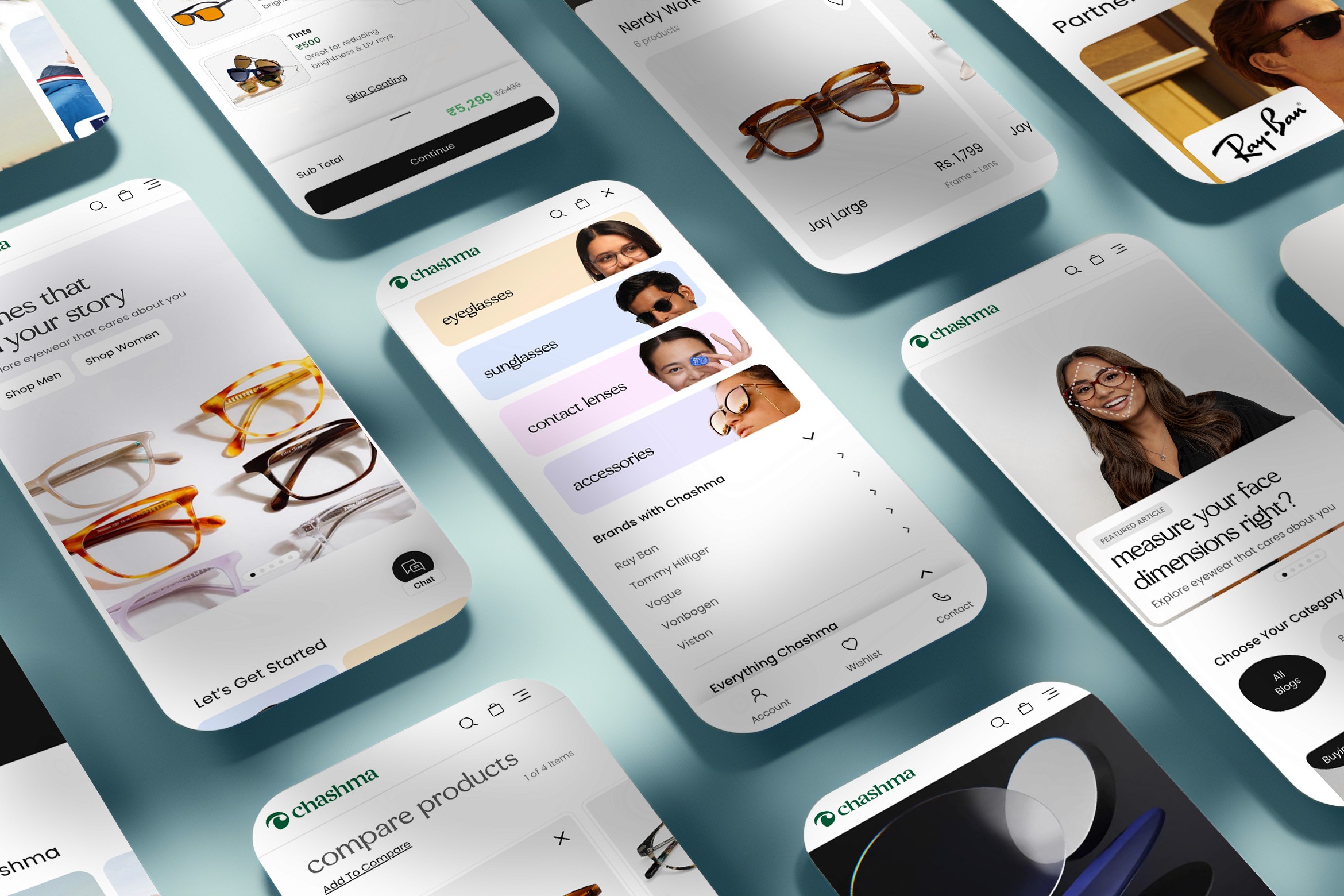
The Chashma project set out to reimagine online eyewear for modern Indian users with a familiar, credible, and guided experience. The old site lacked structure and personalization, leaving users unsure about fit and quality. Our goal was to create a warm, information-rich, mobile-first platform that captures the advisory feel of an expert optician visit.
Platform
Web - Responsive
My Role
Design Lead
Skills Used
Design Systems
Creative Direction
Illustration
Icon Design
User Experience
Interaction Design
Identity Design
⬥
Introduction/Challenge
Chashma is a growing eyewear platform that aspires to make buying glasses online simple, trustworthy, and personal.
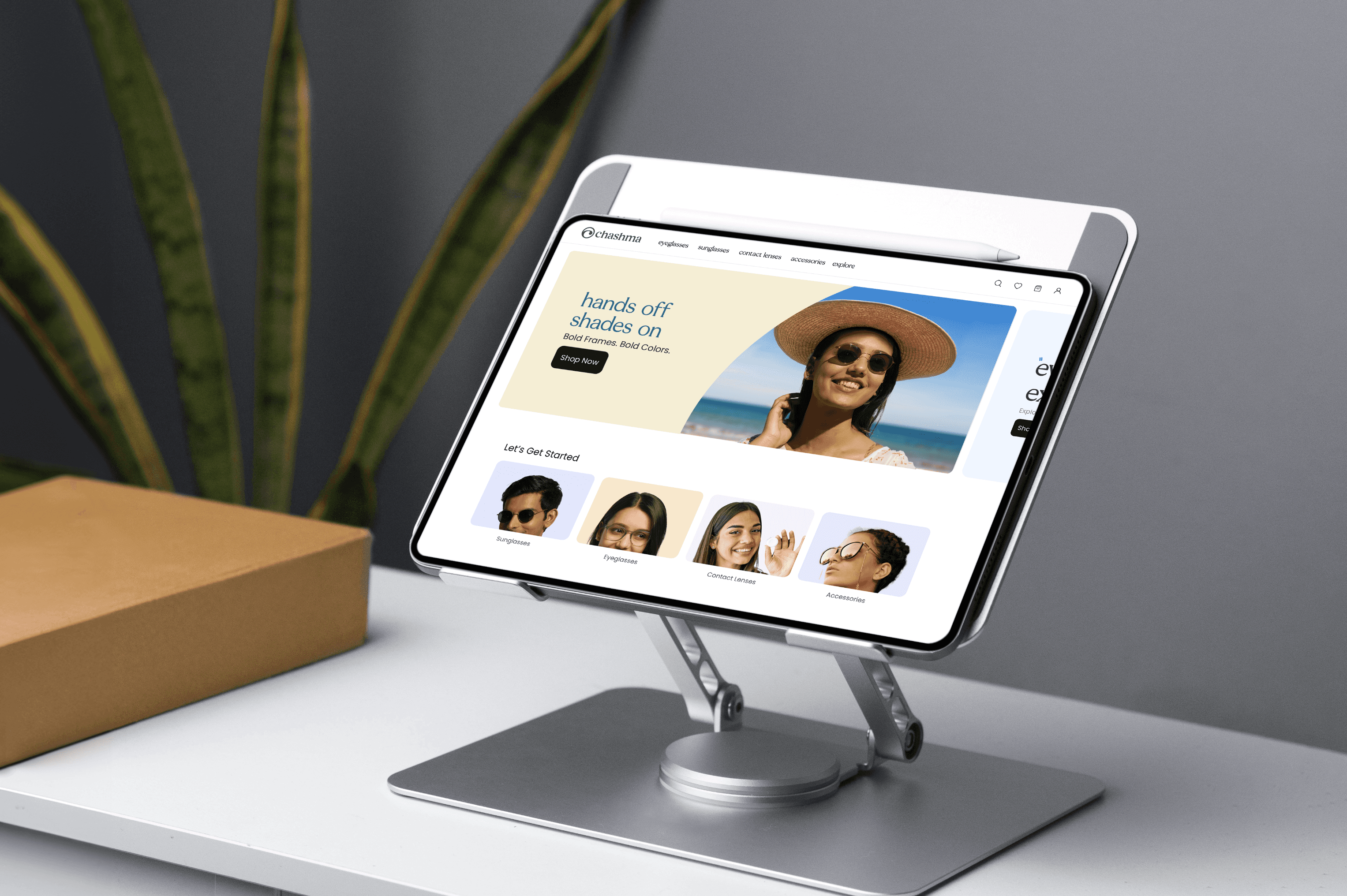
The goal was to transform Chashma’s cluttered, information-heavy website into a guided, confidence-building digital platform. While the original site provided product variety, it lacked clarity, structure, and emotional connection. Through in-depth user research, retail benchmarking, and UX strategy, we redesigned the experience to feel intuitive, credible, and warm. The result is a mobile-first platform that balances product education with inspiration, making eyewear shopping as seamless and personal as an in-store visit.
⬥
The Solution
⬥

Spectacles made personal.
A design system built to empower eyewear discovery with clarity, assurance, and character.
Insights & Interventions
Ethnographic research & interviews: Studied how different users browse, validate, and buy eyewear.
Decision-making mental models: Mapped how users choose based on style, purpose, or price.
UX audit + competitor analysis: Evaluated Lenskart, Titan Eye+, Eyemyeye, Warby Parker and more to identify gaps.
Personas & empathy journeys: Built flows for fashion-led, utility-led, and value-driven shoppers.
Survey insights (78+ users): Identified hesitation around sizing, returns, lens clarity, and fit confidence.
Retail store visits: Observed real-world display cues, buying triggers, and offline decision behaviors.
Feature Strategy
Curated flows based on intent: utility or style
Visual try-ons with expert nudges
Frame Advisor for face shape, activity, and preference-based fit
Verified reviews covering lenses and frames
Detail-rich PDPs with infographics, coatings, and fit notes
Comparison tools and visual lens selectors
Personalisation options like temple engraving and case selection
Thoughtful unboxing and packaging moments
A “Learn” hub for lenses, fits, coatings, and care guidance
Design Execution
Information architecture reimagined: Journey-first categorisation (by need, fit, activity) instead of product catalogue dump
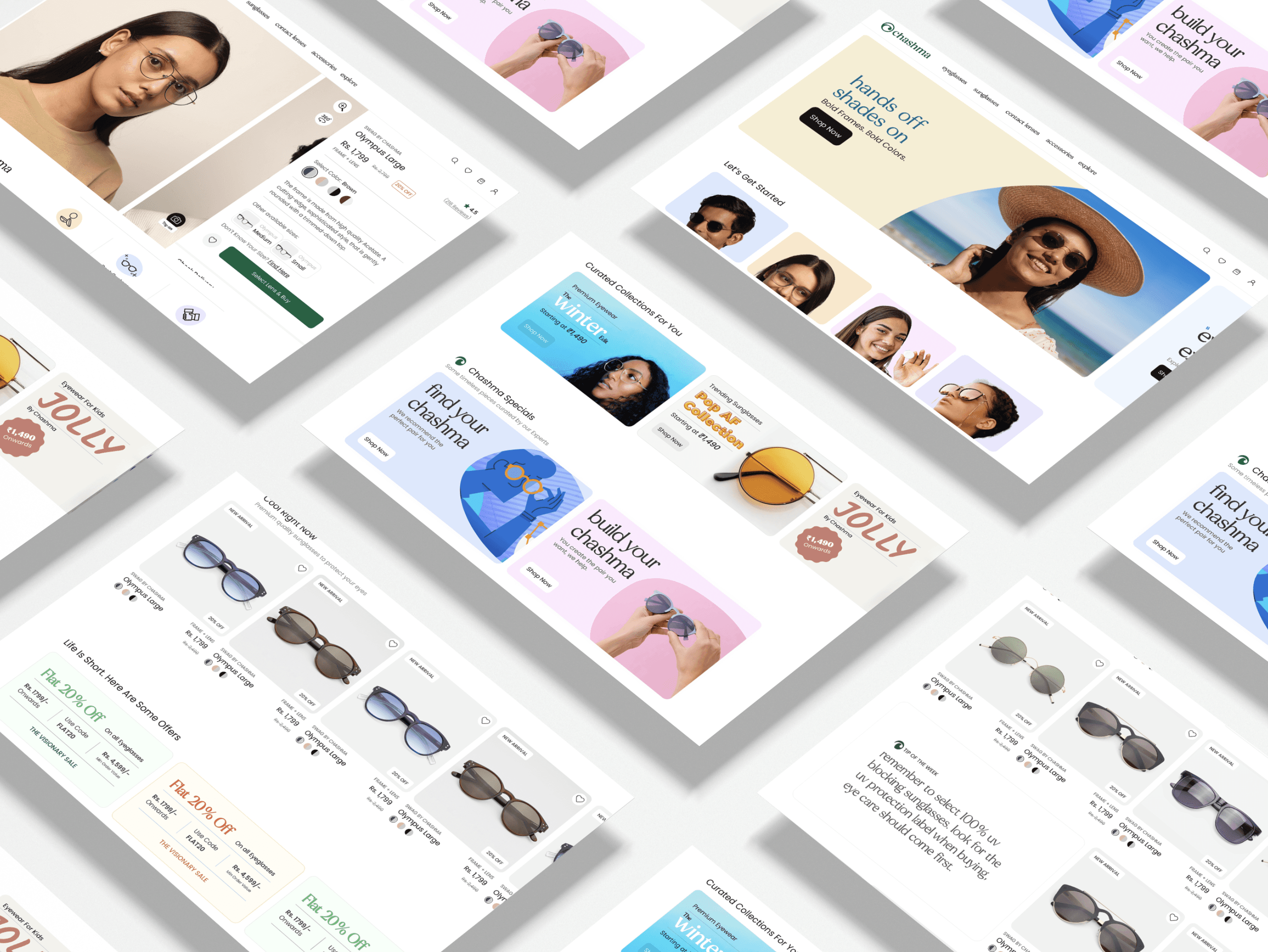
Simplified UI with retail clarity: Uniform backdrops, clean grid, consistent product display
Soft colour palette + warm tone: Evoking trust, care, and comfort
Modular layouts: For campaigns, lifestyle-led bundles, and expert tips
Adaptive components: Sticky CTAs, smart filters, usage toggles
Editorial-inspired imagery: People-first, relatable, and human
⬥
UX & Architecture
Rebuilt information architecture grounded in user behavior
We redesigned Chashma’s information architecture to reflect how users naturally think about and shop for eyewear, rather than forcing them into a product-first or overly technical flow. The earlier structure presented frames and lenses in a way that felt disjointed and transactional, leaving users overwhelmed by technical jargon and uncertain about how to proceed.
Through research and user testing, we uncovered three dominant drivers of decision-making: fit, function, and fashion. These became the pillars of the new taxonomy. Fit pathways focus on helping users quickly filter by face shape, size, and comfort, giving them immediate reassurance. Function-driven pathways guide prescription-led buyers by highlighting lens types, coatings, and use cases like reading, computer work, or outdoor wear. Fashion pathways appeal to style-seekers with curated collections, trends, and occasion-based recommendations.
This restructuring makes the experience intuitive, discoverable, and user-first. By reducing clutter and decision fatigue, it enables a smoother journey from exploration to selection, with every page designed to answer common questions before they create friction. The result is a guided, confidence-building flow where users feel supported and understood, transforming what was once a complex, uncertain process into a streamlined, trust-led shopping experience.

⬥
Modules & Features
⬥
Rebuilding Eyewear Shopping With Clarity and Trust
Chashma’s redesigned experience is shaped around four core modules that simplify how users discover frames, choose lenses, personalise their eyewear, and feel supported after purchase. Each module addresses the key barriers identified in research such as low fit confidence, lens confusion, and trust gaps. The result is a guided, mobile-first eyewear journey that feels clear, credible, and reassuring at every step.
Frame Discovery & Confidence Tools
Chashma users struggle with sizing, fit, and trust, most browse offline for confidence before buying online. This module solves that gap.
Key Features
Smart collections built on user styles and face–shape cues
High-definition product views with model shots
Virtual Try-On & “Face Match” nudges (mirrors offline try-first behaviour)
Size guides, measurement tools, and first-time–friendly fit explainers
Social proof: model images, verified reviews, “popular this week” signals
User Goals Enabled
Users depend on model images for approval and fit validation
First-time buyers struggle with size confidence and rely on offline reference points
Style-first shoppers want variety, curation, and fresh designs
Business Enablement
Reduces bounce caused by confusion
Helps users make decisions without store visits
Drives conversions for both fashion-led and utility-led shoppers

Lens Selection & Guided Prescription Flow
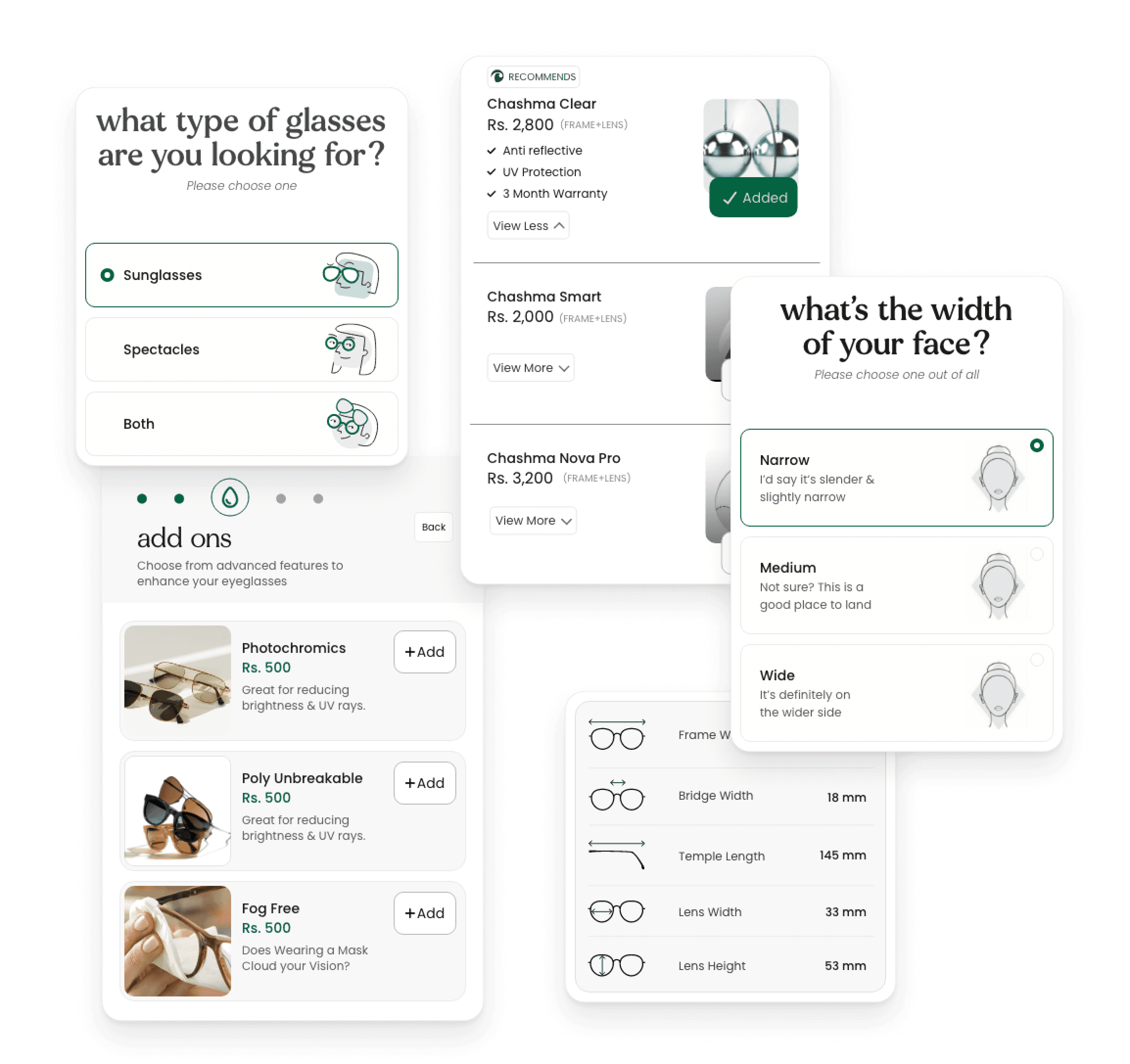
User research shows lens selection is the biggest point of confusion — too technical, unclear value, and lacking guidance.

Key Features
Step-by-step lens wizard based on lifestyle, need, and power
Visual comparison of lens features (blue cut, coatings, thickness)
Prescription input flow with clarity on required fields
“We Dispense Not Sell” positioning to emphasise credibility
Nudges for expert tips, care-based recommendations, and brand transparency
User Goals Enabled
Users are unsure about lens features and health concerns, seeking guidance
Lens selection depends on brand, functionality, and price mix
Users appreciate detailed lens explanation like offline opticians provide
Business Enablement
Distinguishes Chashma as an expert dispenser, not a discount-led seller
Reduces returns caused by “wrong lenses”
Drives higher cart value through purposeful lens add-ons

Personalisation, Customisation & Value-Add Services
Users want eyewear that feels “mine” from engravings to curated collections paired with strong service experiences.
Key Features
Frame engraving, lens engraving & custom tints
Micro-collections & purpose-led categories (sports, work, travel)
Home Try-On integration with preference capture
Add-ons: DIY kits, cords, sprays, cleaners, lens cases
User Goals Enabled
Users love personalisation, tints, curated experiences, and “show-me-my-style” moments
Customisation increases emotional ownership and meaning of the product
Add-on accessories and utilities matter to value-driven and older users alike
Business Enablement
Increases AOV with accessories & add-ons
Enhances loyalty and perceived brand personality
Creates emotion-driven stickiness beyond price-led competition
Assurance, Support & Post-Purchase Ecosystem
Trust is everything in eyewear. Users need reassurance at every step — from authenticity to delivery expectations.
Key Features
Clear delivery timelines, return policies, and order updates
Verified reviews per product + humanised testimonials
Chat-first buying assistance, call support, and expert guidance
Packaging inserts: care guides, QR for assistance, review nudges
Loyalty touchpoints: profile creation, repeat-purchase rewards
User Goals Enabled
Users worry about being “scammed” or receiving the wrong product when buying online
Trust improves with transparency, verified reviews, and visible expertise
Delivery clarity, service accountability, and human connection matter deeply (offline audits)
Business Enablement
Boosts trust, especially for first-time buyers
Encourages repeat purchases through a care-driven ecosystem
Strengthens brand positioning as credible, expert, and dependable
Chashma Redesign Success Metrics
+40% increase in guided product exploration
Users are engaging with more frames and lens options per session, driven by the new taxonomy, frame finder, and curated style collections.
3.5x increase in lens selection completion
Simplified education modules, visual comparisons, and step-by-step guidance encouraged users to complete prescription and lens choices with confidence.
30% reduction in bounce rate on mobile
Mobile-first layouts, faster load times, and scroll-friendly flows led to stronger retention and deeper browsing.
2x increase in interaction with trust signals
Prominent warranty markers, verified reviews, and lens certification badges increased engagement with reassurance content.
25% growth in returning visitor rate
Wishlist persistence, prescription history saving, and personalised nudges are nurturing repeat behaviour.
70% increase in time spent on product pages
Users are spending significantly longer exploring frame details, lens guides, and virtual try-on features, showing stronger confidence and interest.
Target: 4–5% conversion rate
Up from under 1.5%, the redesign is positioned to enable this growth through clarity, trust-building, and guided product flows.
⬥
Conclusion
⬥
The Chashma design system was created with flexibility at its core, using reusable UI modules that can be applied across multiple journeys without compromising creativity. Each component adapts fluidly to new frame launches, evolving lens categories, promotional campaigns, and style-led editorial content. This approach ensures consistency in look and feel while giving the brand room to experiment with fresh layouts, seasonal stories, and user engagement tools. By prioritising scalability, the platform can grow alongside the business, supporting new features and verticals while maintaining a cohesive, intuitive user experience.



⬥
More Projects
⬥