Driven by insight and translated into form, colour, and structure, this case study builds a brand identity that simplifies complexity without losing character.

Chashma — Brand Identity & Visual Design
Chashma was envisioned as an eyewear brand that moves beyond selling frames to delivering a considered, human-centred dispensing experience. The challenge was to build a brand that balances optical expertise with cultural relevance, creating a system that feels as trustworthy as a specialist and as engaging as a lifestyle brand.
Category
Logo Design / Identity Design /
Branding / Ecommerce / Packaging
My Role
Design Lead
NOTE: This work has been produced by Kwazi Design LLP, who are the owners of this Intellectual Property alongwith the respective client.
My role in the project is specified.
The Gap Between Guidance and Convenience
The starting point revealed a broken landscape. Most eyewear platforms overwhelm users with excessive information, unclear journeys, and fragmented decision-making tools. At the same time, physical stores offer guidance but lack consistency and scalability. Users end up navigating between trust and convenience, rarely getting both in one place.
Research showed that people do not fully trust online eyewear purchases. They browse extensively, validate choices offline, and rely on external opinions before committing. The process is not linear, it is exploratory, emotional, and often uncertain. What stood out was this: users value control, but only when supported by clarity and guidance.
Insight
Eyewear becomes meaningful only when users feel ownership over their choice. The act of selecting frames and lenses is not just functional, it is deeply personal. When users are guided, not sold to, they engage more, trust more, and value the product more.
Brand Idea
“We Dispense, Not Sell.” Chashma positions itself as a knowledgeable companion rather than a retailer. The brand behaves like a loyal friend, honest, informed, and quietly confident.
Brand Principles
Care over commerce.
Clarity over complexity. Guidance over choice overload.
Personalisation over standardisation.
These principles shaped both identity and interface decisions.
Clarity, Carried with Character
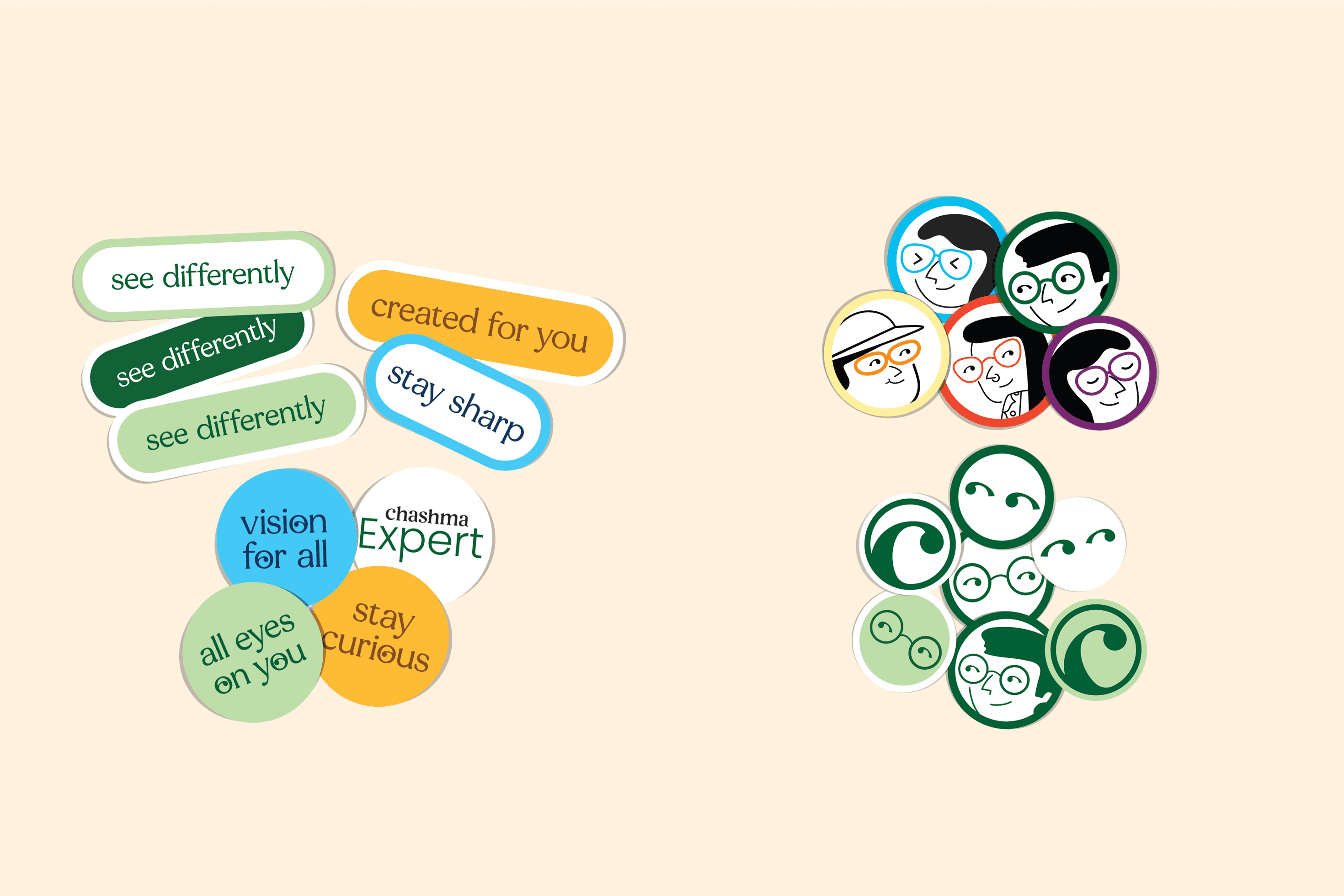
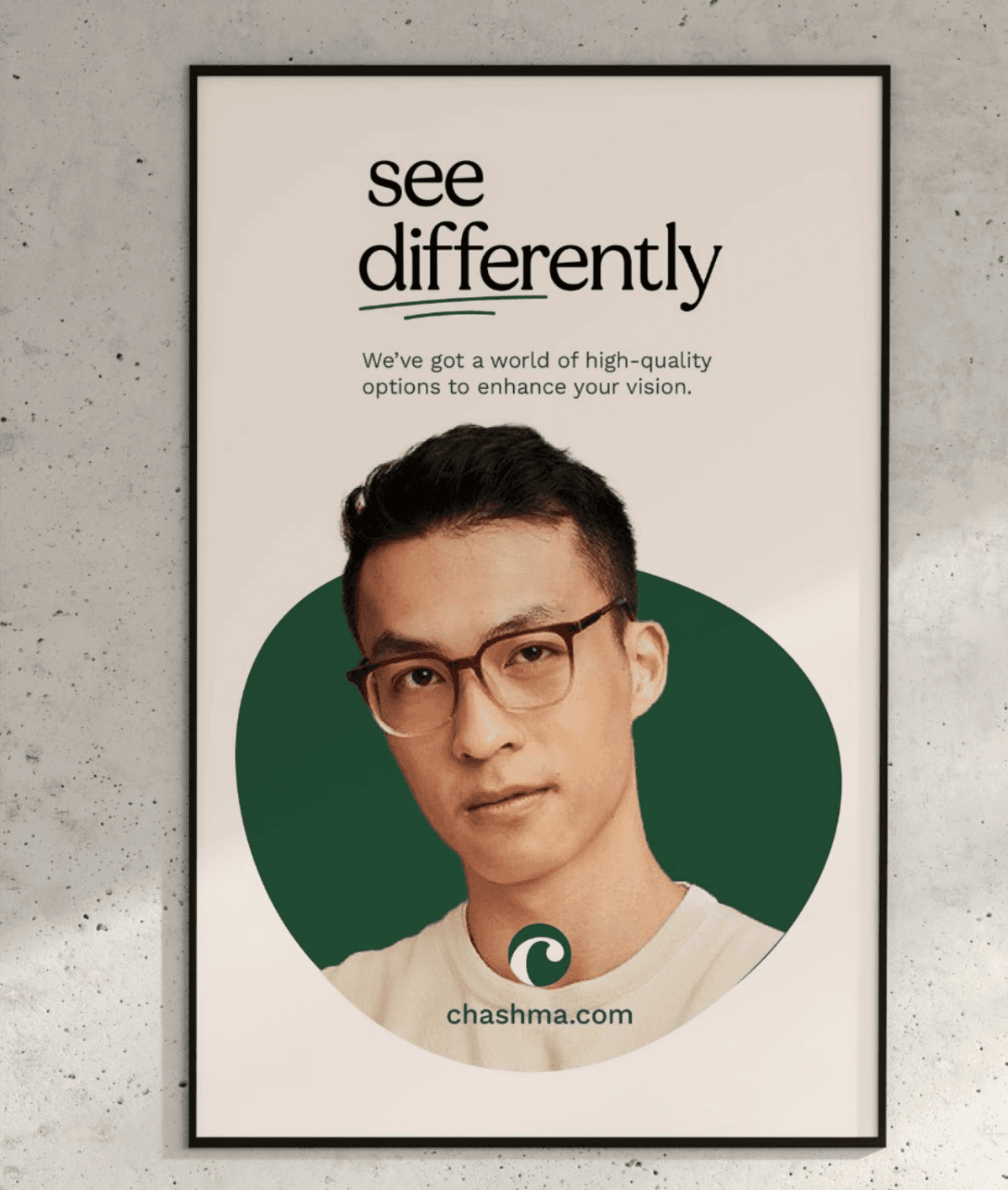
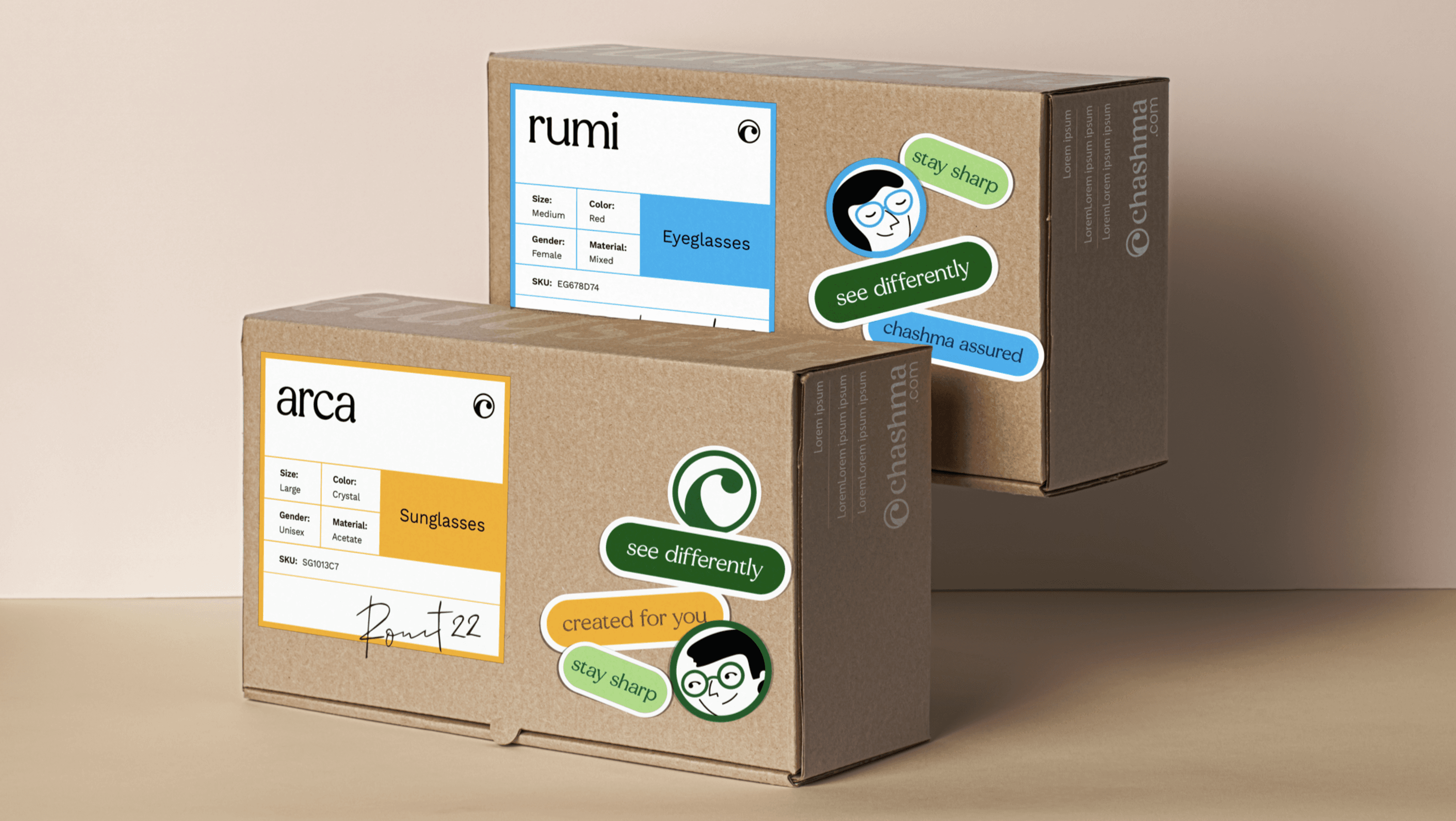
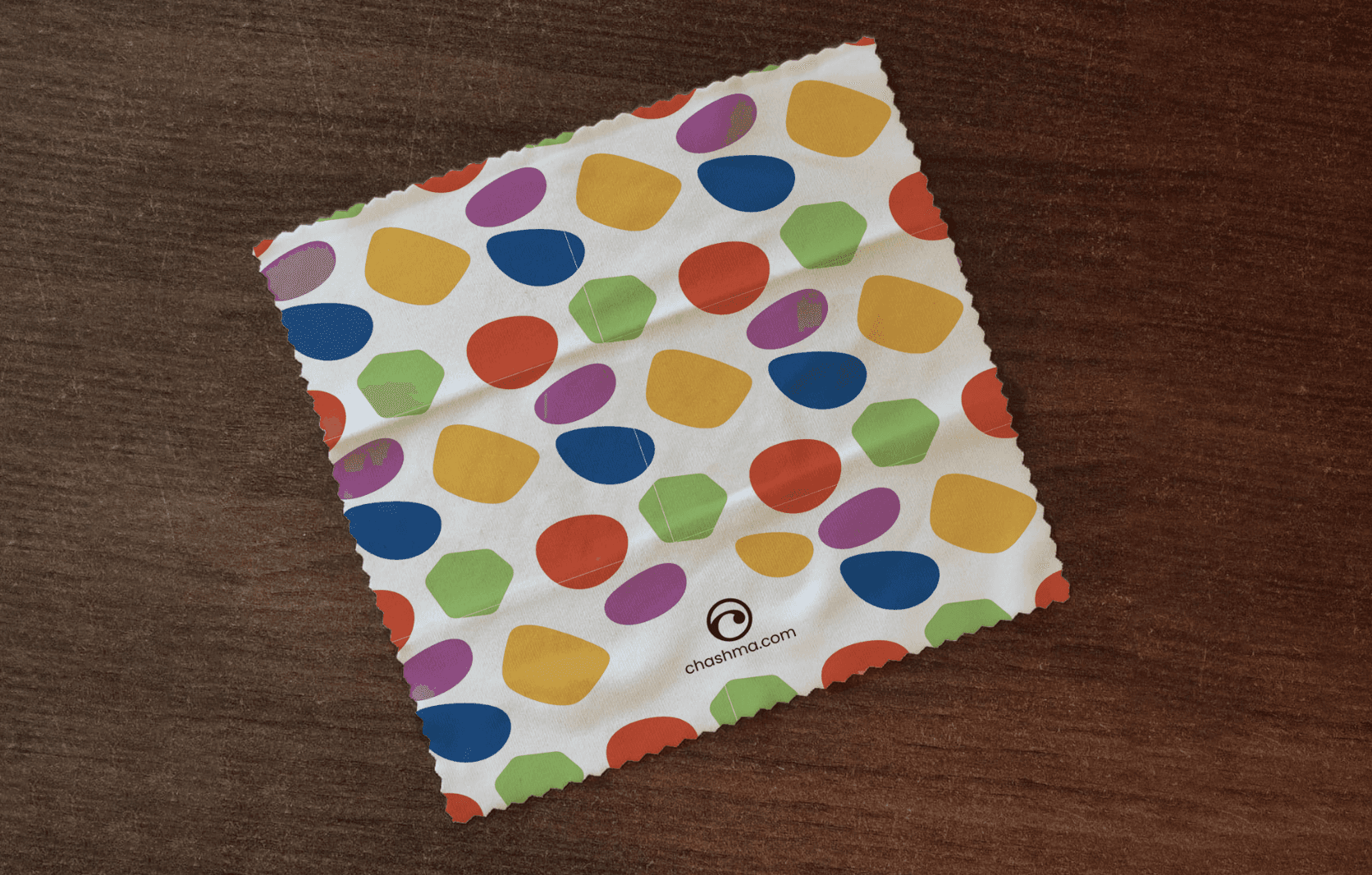
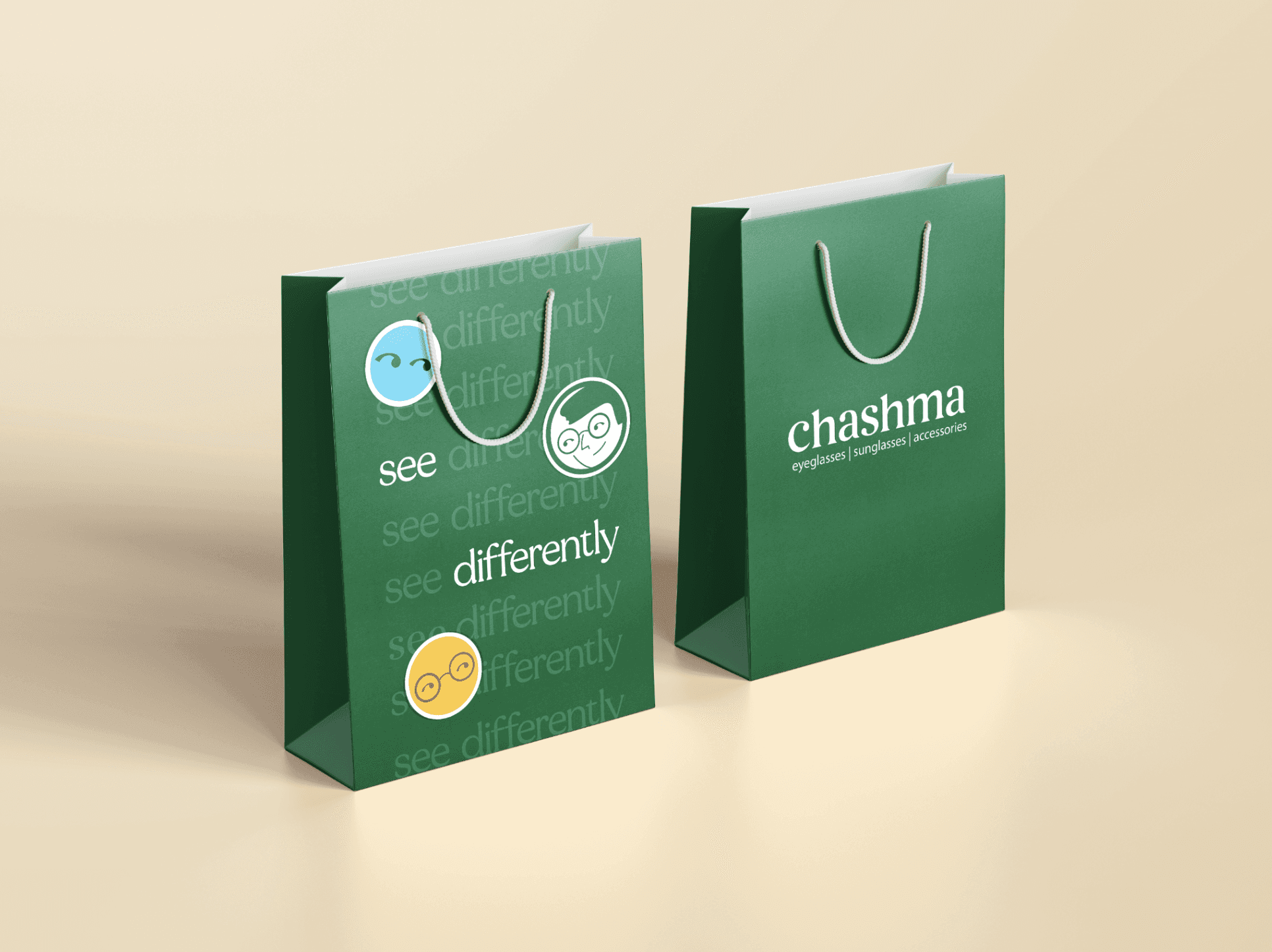
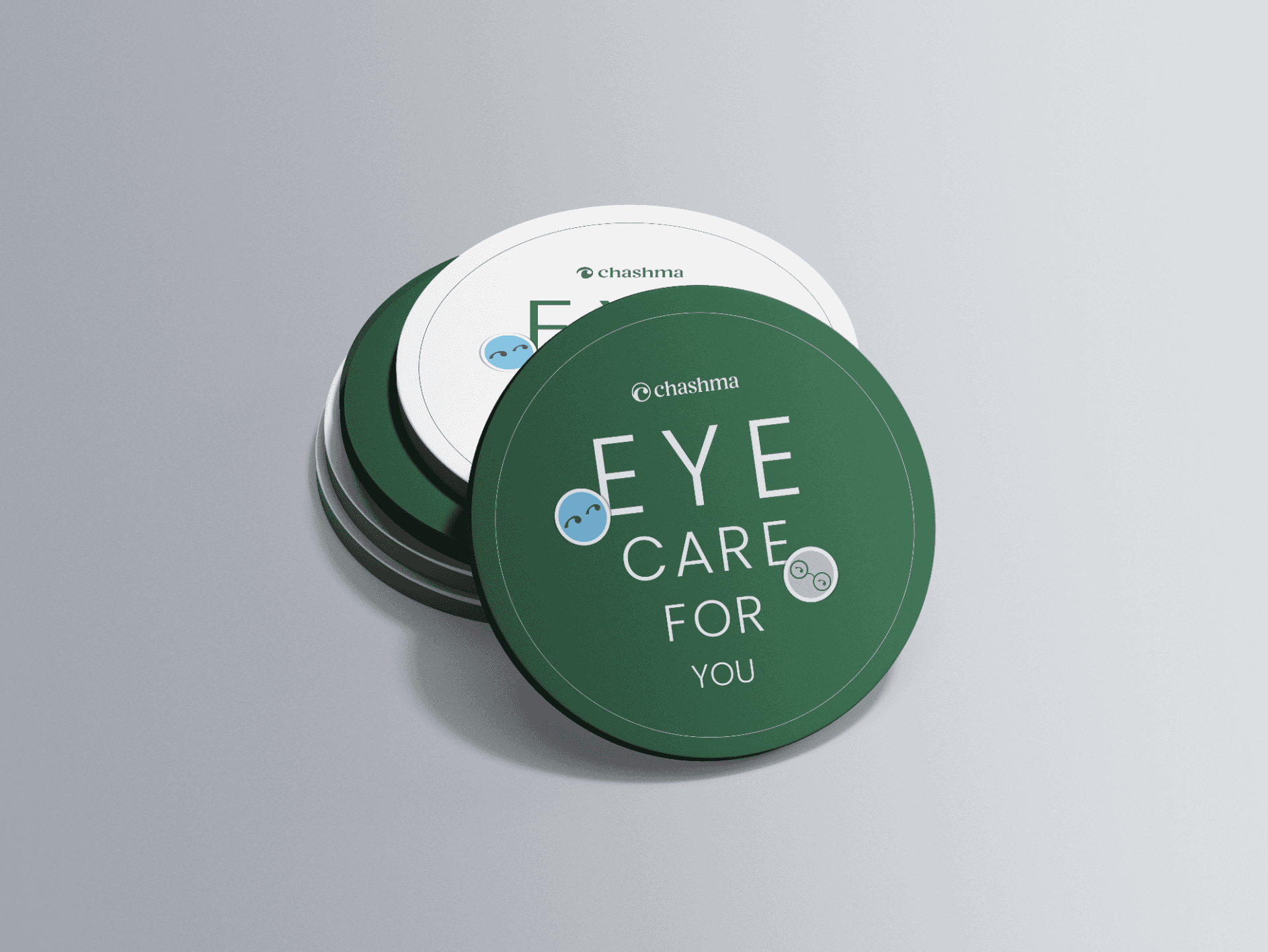
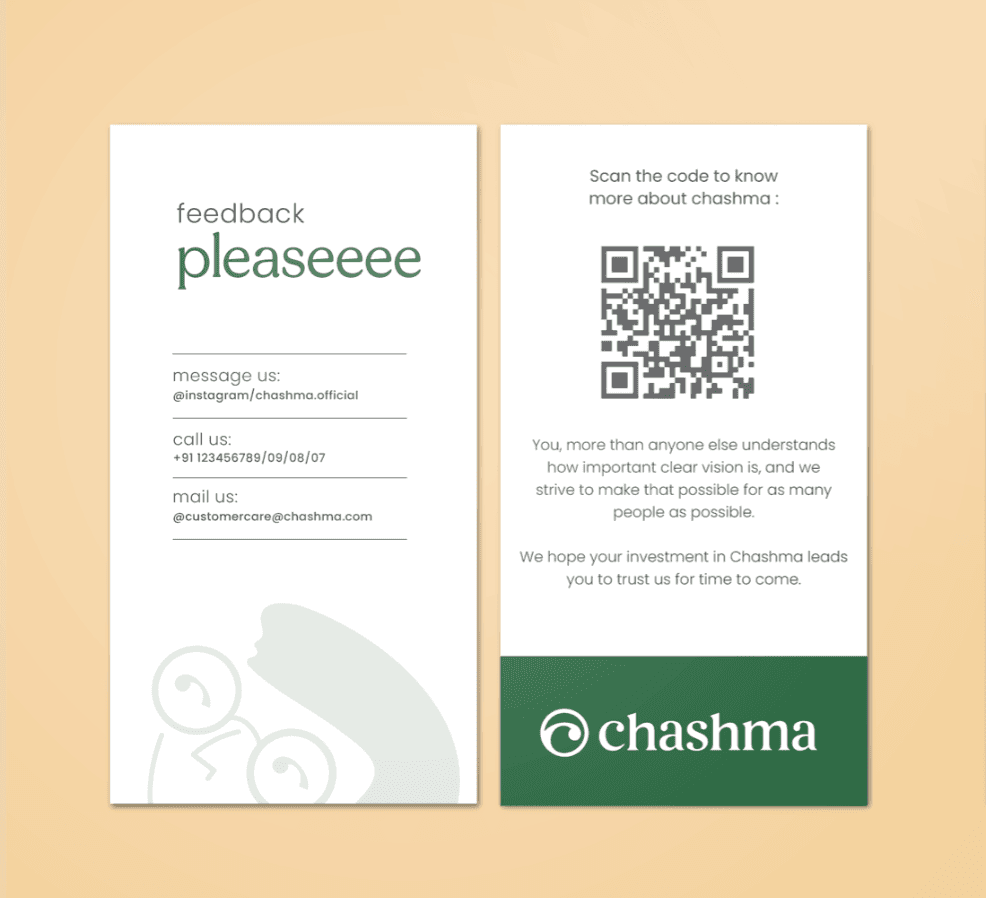
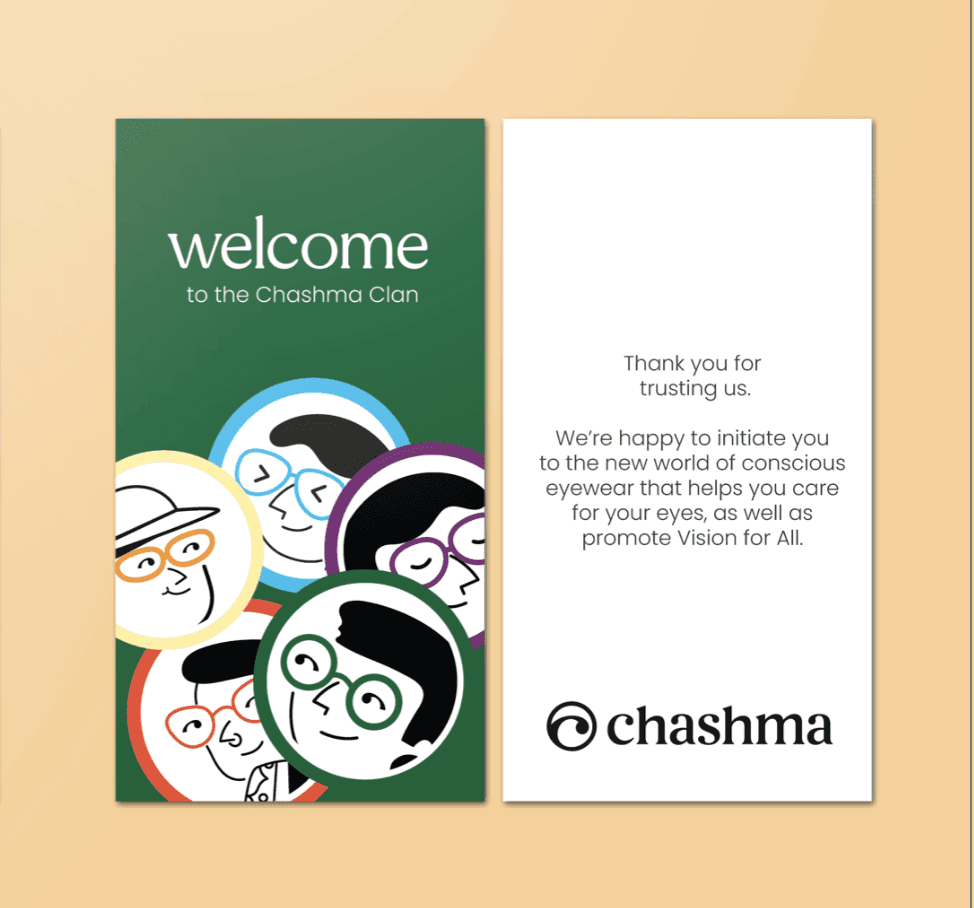
The visual identity was designed to reflect this balance. On one end sits precision, structure, and clarity, signalling expertise and trust. On the other sits warmth, relatability, and expression, ensuring the brand does not feel distant or clinical. This tension became the defining characteristic of the system.
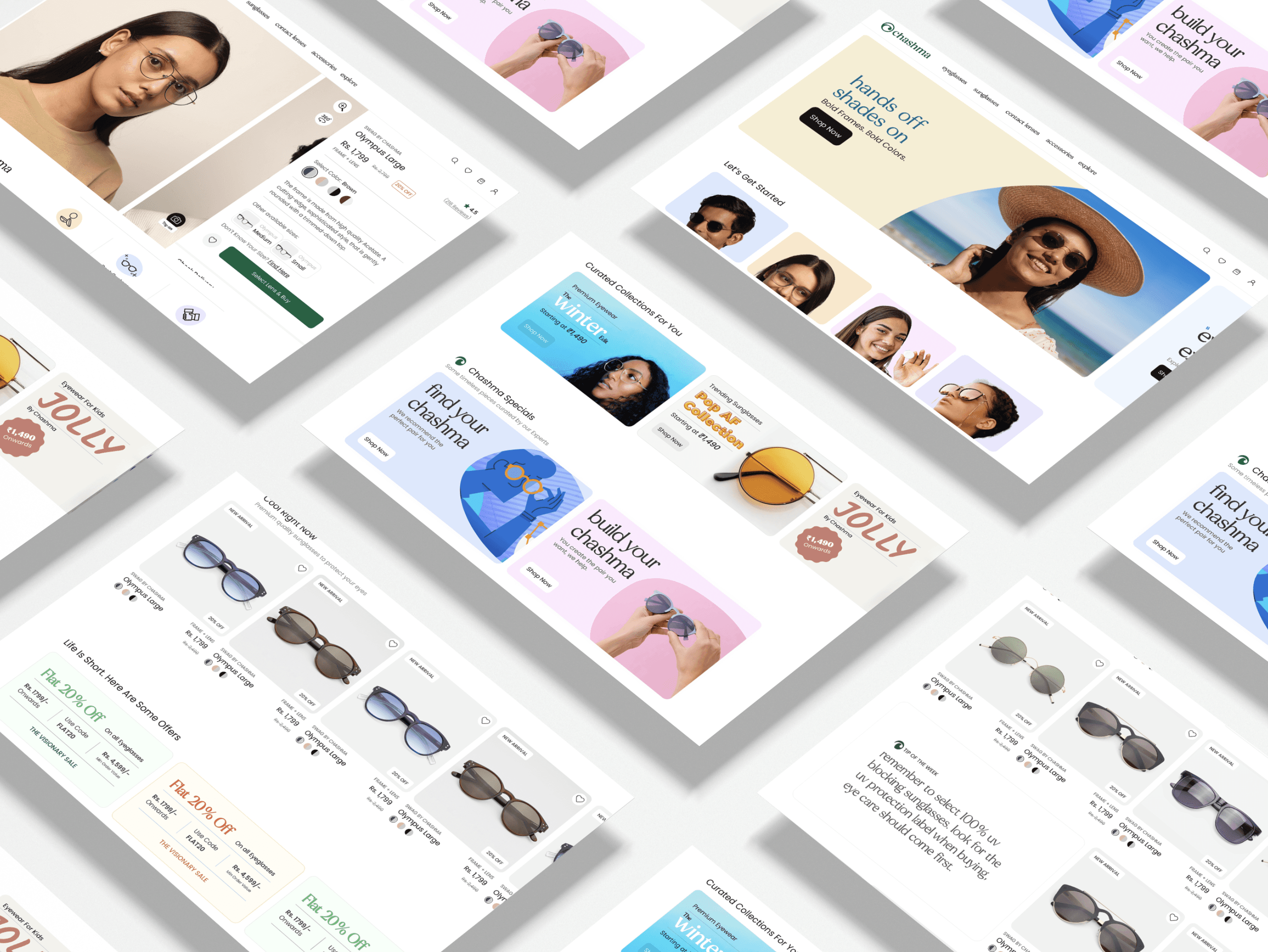
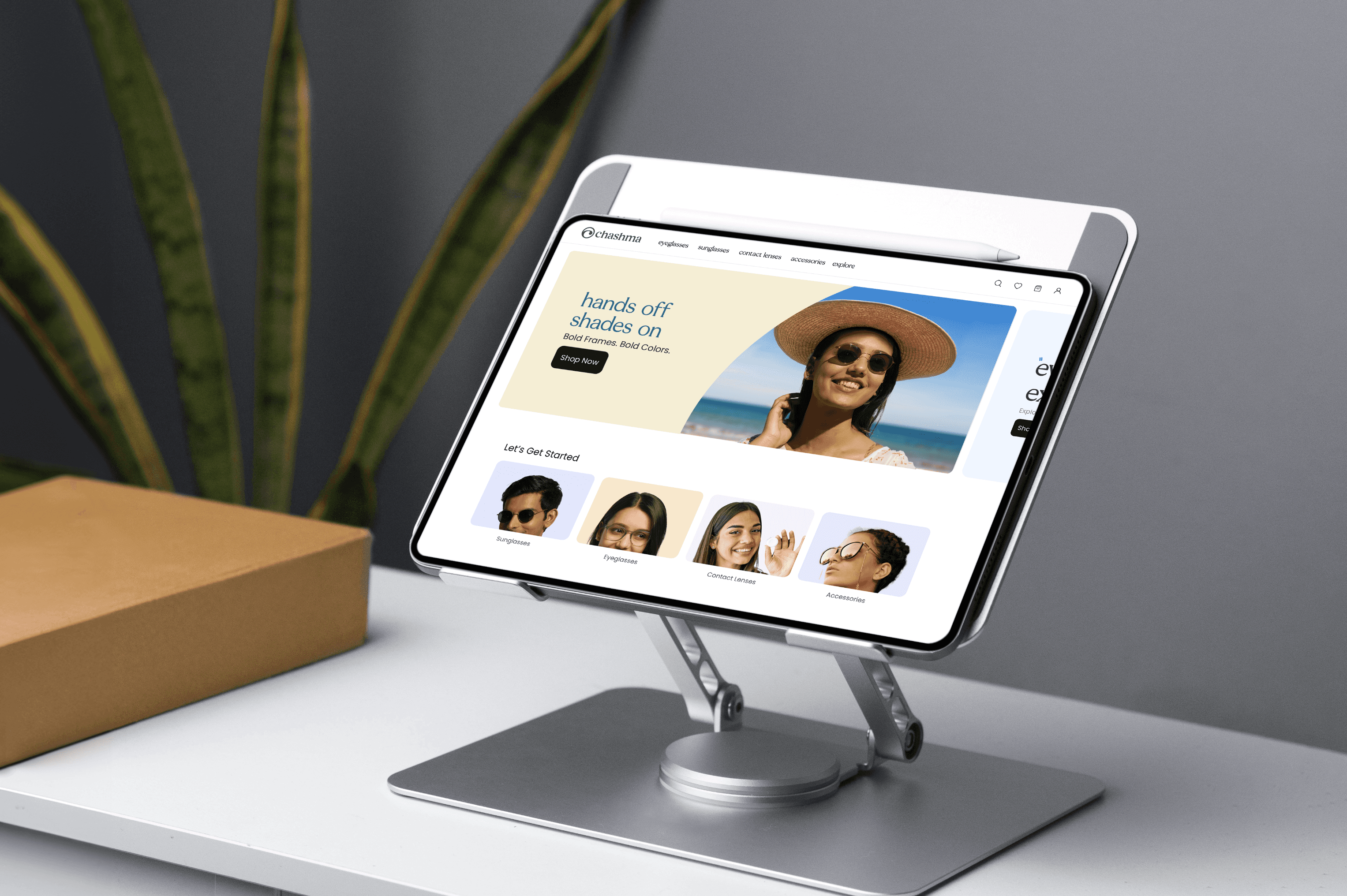
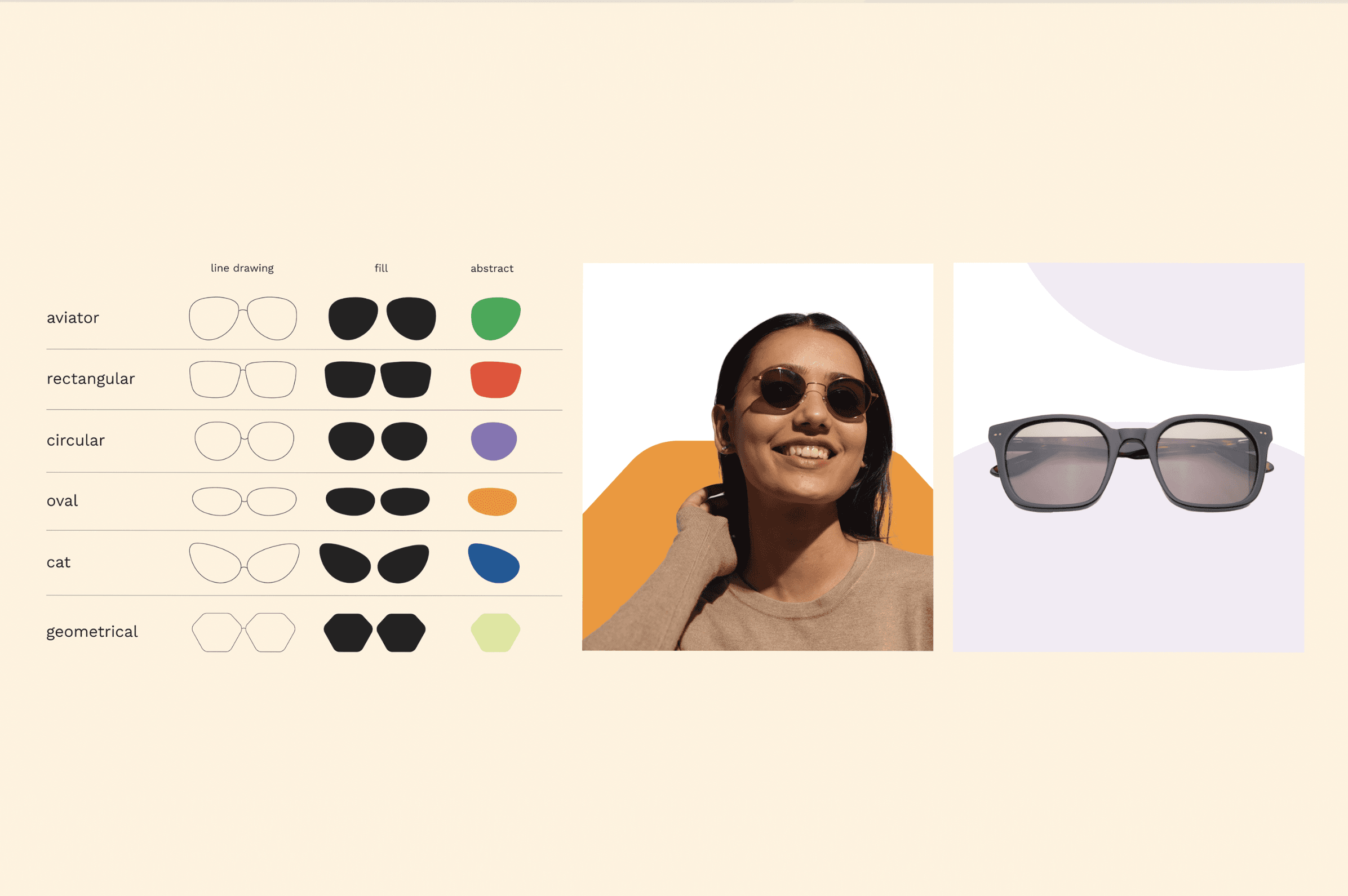
Typography and layouts were kept clean and intentional, allowing information to be easily navigated. At the same time, colour and imagery introduced a sense of energy and personality. Product visuals were not treated as isolated objects but placed in context, helping users understand how frames would actually look and feel.
Visual Identity Approach
Humanising Eyewear
Instead of presenting products as static objects, the system focuses on:
Real-world context
Relatable copy
Model-led visualisation
Users don’t just see frames, they see themselves in them.
Simplifying Complexity
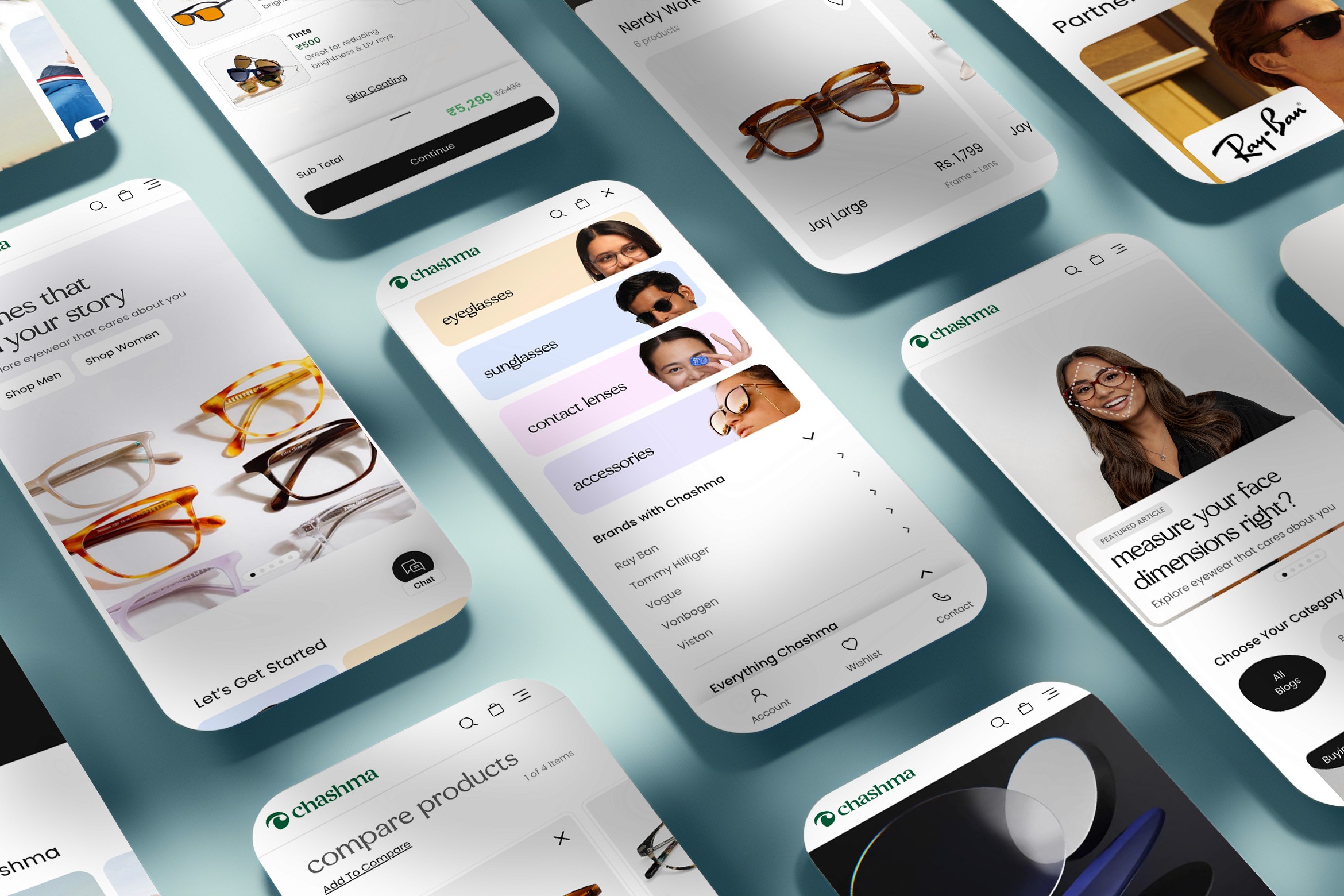
Lens selection and technical information were reframed through:
Layered information architecture
Visual comparisons and guided flows
Conversational microcopy
This reduces cognitive load while retaining depth.
Designed for Mobile Behaviour
With ~89% users on mobile, the system prioritises:
Scroll-first storytelling
Clear CTAs and decision checkpoints
Fast visual scanning